

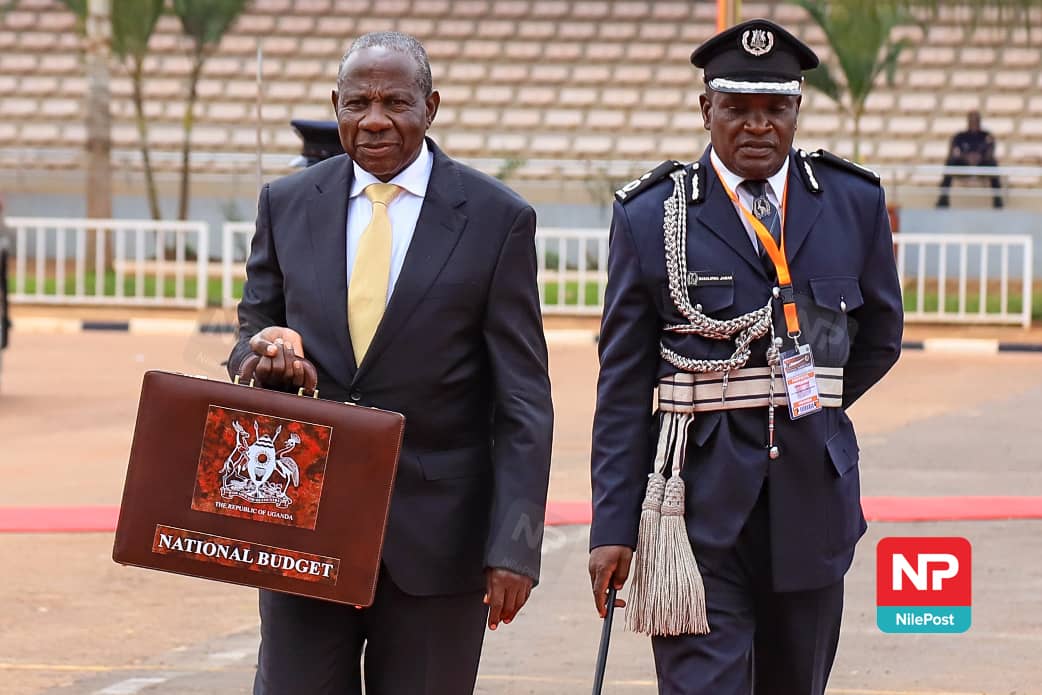
The Ministry of Finance, Planning and Economic Development has increased the Budget Framework Paper (BFP) for Financial Year 2026/27 from Sh69.4 trillion to Sh78.2 trillion, signaling a more ambitious spending plan despite mounting economic pressures.
The nearly Sh9 trillion increment underscores government’s determination to accelerate implementation of its tenfold economic growth strategy.
However, the revised ceiling has sparked debate among economists and civil society organisations (CSOs), who argue that Uganda’s fiscal space remains constrained.
The economy’s competing pressures are reflected in the new budget framework. While total expenditure has been raised to Sh78.2 trillion, external budget support is projected to decline to Sh1.2 trillion, and project financing is expected to drop to Sh10.4 trillion.
According to the Finance ministry, the expanded resource envelope will prioritize key growth enablers aligned with the country’s long-term economic transformation agenda—particularly sectors critical to boosting productivity, industrialisation, and export growth.
Officials maintain that the higher ceiling is necessary to fast-track strategic investments that can unlock broad-based economic expansion.
However, several CSOs and independent economists caution that ambition alone will not guarantee results. They argue that credible financing plans and disciplined expenditure management will be crucial to prevent further fiscal strain.
With rising debt servicing obligations, persistent revenue mobilisation gaps, and competing social sector demands, analysts warn that expanding the budget without structural adjustments could heighten fiscal vulnerabilities.
Government officials, nonetheless, remain confident that careful prioritisation under the tenfold growth strategy will ensure value for money and deliver sustainable economic returns.
The Sh78.2 trillion ceiling now sets the stage for a critical fiscal debate. While government sees it as a catalyst for accelerated transformation, critics insist that long-term sustainability will depend on affordability, efficiency, and structural discipline in public finance management.
